

Trafford's new fines policy starts at £35,000 for illegal eviction and £6,000 for refusing tenants on benefits. Full Council votes on 14 October. What it sets.
A landlord in Trafford who illegally evicts or harasses a tenant now faces a starting fine of £35,000. Refusing a tenant because they have children or claim benefits starts at £6,000.
Those figures come from Trafford Council’s new civil penalty policy for private renting. It was in the papers for the council’s Executive on Monday 21 September. The council says the Executive formally approved the Renters’ Rights Enforcement Policy that night.
The Executive report asks it to note the policies and recommend them to Full Council for approval. The next Full Council meeting is on Wednesday 14 October at 7pm.
Why the council needs it
The Renters’ Rights Act 2025 turned housing enforcement from a power into a duty. Since 1 May 2026, councils must enforce landlord law and report what they do to the Secretary of State. The report says the council needs a published policy to use its powers lawfully.
The Act also raised the maximum civil penalty for the most serious offences from £30,000 to £40,000. For lesser breaches the maximum is £7,000.
The starting fines
The civil penalty policy sets a starting point for each breach. Most follow the national starting points in government guidance. Trafford sets its own only for breaches of licence conditions.
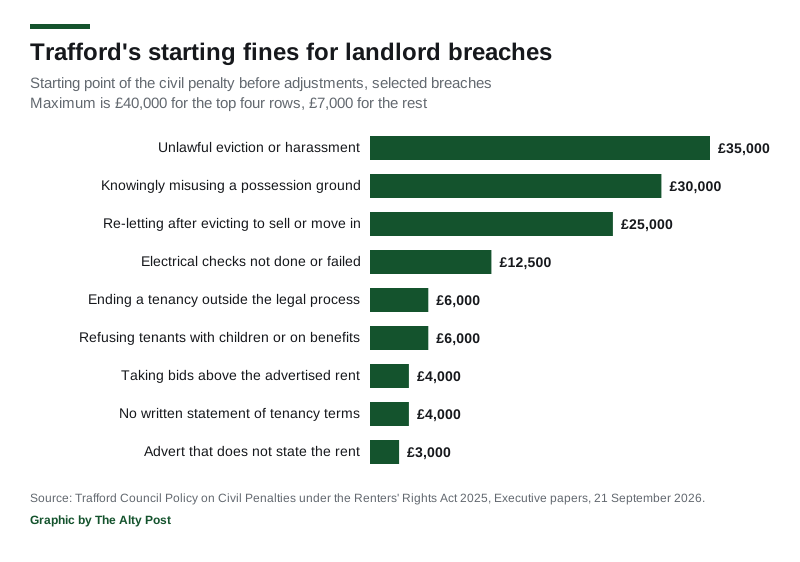
For tenants, the ones that matter most are:
- Unlawful eviction or harassment: £35,000.
- Knowingly relying on a possession ground that cannot succeed, where the tenant then leaves within four months: £30,000.
- Re-letting or re-marketing a home within the banned period after evicting a tenant to sell or move in: £25,000.
- Trying to end a tenancy with a notice to quit, by word of mouth, or outside the Section 8 process: £6,000 each.
- Refusing tenants because they have children, or because they claim benefits: £6,000 each.
- Inviting or accepting offers above the advertised rent (rental bidding): £4,000.
- Not giving a written statement of the tenancy terms: £4,000.
- Advertising a home without stating the rent: £3,000.
Electrical safety breaches start at £5,000, £12,500 or £20,000, depending on the regulation broken. Failing to remove a Category 1 hazard, the most serious kind, where it was reasonably practicable starts at £6,000.
How a fine is worked out
The starting point is only the first step. The policy then moves the figure up or down by 20% depending on the “Landlord Type”, never above the legal maximum.
A higher standard is expected of landlords who:
- own, control or manage a significant portfolio
- have significant letting experience
- let or manage houses in multiple occupation
- are companies, or directors of landlord companies
The council then weighs aggravating and mitigating factors. For unlawful eviction, those include violence or threats, getting rid of a tenant’s belongings, and the tenant losing their home.
A landlord who pays in full within 28 days of the final notice gets 15% off. A landlord can appeal to the First-tier Tribunal, which can confirm, cut, raise or cancel the fine. It cannot go above the £7,000 or £40,000 maximum.
Who enforces what
Three council teams share the work:
- Private Sector Housing handles property condition and housing standards.
- Trading Standards handles lettings practices such as rental bidding and discrimination.
- Housing Options Service Trafford (HOST) handles tenancy relations.
The council received £55,855.24 of government “new burdens” funding for 2025/26 and £130,062 for 2026/27 to pay for the extra work. By law, fine income must go back into housing enforcement.
The policy was drafted with Justice for Tenants, which the report says worked with the government, environmental health chiefs and more than 130 councils on a model policy. It was checked against 53 recent tribunal cases.
What is still to come
The report lists changes due from late 2026 onwards:
- a national database of landlords and properties, with penalties for not registering
- a compulsory ombudsman for private renting
- the Decent Homes Standard extended to private rented homes, for which the report cites a government consultation target of around 2035 or later
- Awaab’s Law, which sets deadlines for fixing serious hazards, extended to private renting
None of these has a confirmed start date in the report.
What it means for you
If you rent privately: Section 21 “no-fault” evictions have ended, and tenancies no longer have a fixed end date. If your landlord tries to end your tenancy outside the legal process, bids up the rent, or turns you away because you have children or claim benefits, the council can now fine them.
- Report a suspected breach through the council’s Renters’ Rights Act page.
- For damp, mould or repairs, report to your landlord in writing first. If that fails, use the council’s disrepair reporting.
- If you have nowhere safe to stay tonight, HOST asks you to call 0161 912 2230 rather than use the online form.
If you are a landlord: check your tenancy paperwork, your adverts and your electrical safety reports now. Size and experience count against you. A larger or corporate landlord starts 20% higher for the same breach.
Council tax, bins and parking for Altrincham are on our council tax bands and bin collection days pages.
Have your say