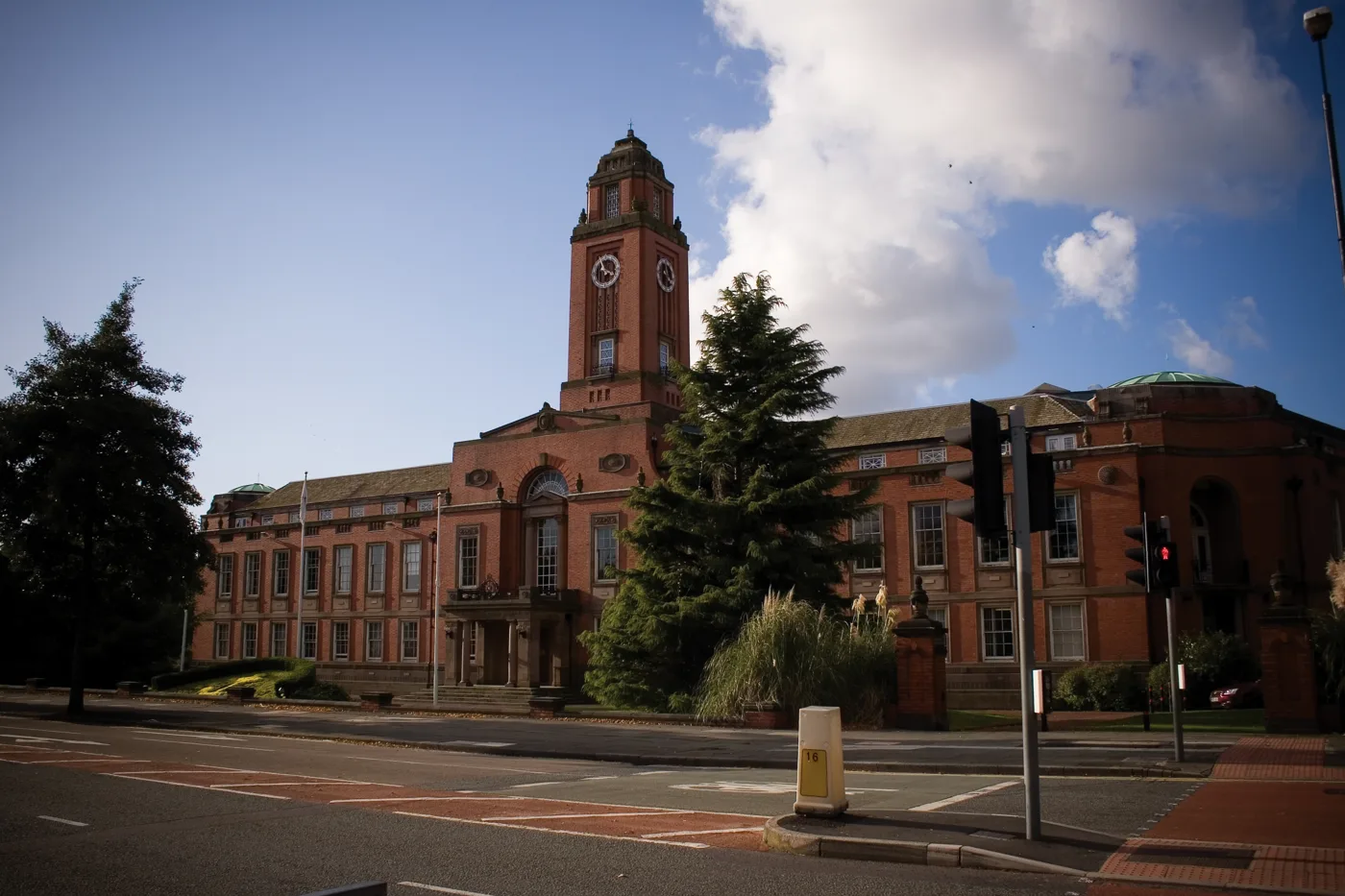

Councillors lose the power to call planning applications in to committee on 31 October. Two people, meeting in private, will decide what gets a public hearing.
From 31 October a Trafford councillor will no longer be able to send a planning application to a public committee. Neither will ten objecting neighbours. Both routes stop working that day, by law, and there is nothing the council can do about it.
Trafford’s Planning and Development Management Committee meets tomorrow, Tuesday 22 September, at 6.30pm to approve the constitutional rewrite that puts the change into effect and to recommend it to Full Council (agenda, 22 September 2026).
What replaces call-in is a Gateway Meeting: two people, a senior officer and one councillor, deciding between them whether an application is heard in public. The council’s own report says there is no requirement for those meetings to be held in public, and no right of appeal against what they decide.
What is actually changing
The Town and Country Planning (Discharge of Local Planning Authority Functions) (England) Regulations 2026 come into force on 31 October 2026, with no transitional arrangements. They apply to every local planning authority in England. Trafford’s report sets out what that means here:
- Schedule 1 applications must be decided by an officer, in every case, with no discretion. That covers householder applications, minor commercial and minor residential schemes, lawful development certificates, prior approvals, non-material amendments and discharge of conditions.
- Schedule 2 applications are delegated to officers by default. They reach committee only if a “nominated officer” and a “nominated Member” both agree they pass a statutory gateway test.
- Ward councillor call-in “will immediately cease when the Regulations come into force”. So will the objection trigger, currently more than ten representations against the officer recommendation.
- The Chair of the committee loses the universal right of call-in.
- Any officer’s power to choose not to use their delegated authority is also lost. Applications can currently be referred to committee at the discretion of the Head of Planning and Development or another senior officer. The report says that “will no longer be lawful” (Agenda Item 9 report).
The gateway test itself is short. The nominated officer and nominated Member must agree the application raises either “one or more issues of economic, social or environmental significance to the local area” or “one or more significant planning matters” against the development plan. The statutory guidance does not define “significant”. It does say the presumption is that decisions are delegated to officers and only exceptionally referred to committee.
Who the two people are, and where they meet
The nominated officer will be the Head of Planning and Development, with substitutes named in the officer scheme of delegation. The nominated Member will generally be the Chair of the Planning Committee, currently Councillor Ben Hartley, and in his absence the Vice-Chair, Councillor Sue Maitland (committee membership, Trafford Council).
The revised Planning Committee Code of Practice sets out how the Gateway Meeting will work:
- Only one nominated officer and one nominated Member may attend on a decision-making basis. Other members may not attend at all.
- Meetings can be held virtually, and decisions can be agreed in writing.
- They should be held at least once a fortnight, and not less than monthly.
- “There is no requirement in the Regulations or guidance for the meetings to be held in public.”
- “Gateway Decisions to delegate applications to officers are final. Ward Members and members of the public have no right of appeal or ability to request that Gateway Decisions are reconsidered.”
The one exception is a material change in planning circumstances, for example a statutory consultee lifting an objection. Even then, a different officer must reconsider it (Agenda Item 10 report).
Three applications on tomorrow’s agenda show what is at stake
Eight applications are listed for decision on Tuesday night. Three are in this patch, and two of them are on the agenda by exactly the routes that stop working on 31 October.
- 38 High Elm Road, Hale Barns. A section 73 application by Willow Haven Care Limited to vary the approved hours for daytime staff at a supported living home for up to four children, from 8.30am to 7.30am, and the age range from 7 to 18 years to 5 to 17. The officer report says it is before the committee “because it has received more than 10 representations contrary to Officer recommendation and has been called in by Councillor Evans”. Fourteen neighbours objected. Recommendation: grant.
- 160-160A Moss Lane, Hale. Bekind Care Ltd wants to change a vacant children’s day nursery into a day and overnight respite facility for up to five young people. It is before the committee because it “has been called in by Councillor Shalom on parking and highways grounds”. Twelve letters of representation, ten of them objecting. Recommendation: grant.
- 307 Stockport Road, Timperley. Evans Built Ltd wants to turn a vacant two-storey office at the corner of Bloomsbury Lane into a house. It is before the committee “due to the applicant being an elected member”. Recommendation: grant (Agenda Item 6, applications).
After 31 October the first two would go to a Gateway Meeting instead, where the number of objections and the fact of a call-in could not be taken into account at all. The report is explicit: the nominated officer and nominated Member “cannot use the fact an application has been called in or has a certain number of representations to determine whether that application goes to Planning Committee”. They may consider only the gateway test.
Own-interest applications like the Timperley one keep a route, under a separate regulation, but it is not automatic either. They reach committee only if the same two people agree.
Trafford says its committee was not the problem
The council’s report is unusually blunt about the reform. It records that Trafford delegated 97.3% of planning applications to officers in 2025-26, against a figure of 95% generally considered a minimum, and that the government’s concern was authorities delegating fewer than 80%.
“No concern has been raised that Trafford’s Planning Committee is not working as it should,” the report says. Member overturns are “relatively infrequent”, costs awards at appeal are “rare”, and several refusals by members have since been dismissed at appeal.
Trafford’s response to the government’s consultation, which ran from 26 March to 23 April 2026, argued that the changes would have forced around 400 applications a year that are currently fully delegated through the gateway test. The government then confirmed councils could layer their own arrangements on top of the national scheme, which is what Tuesday’s report proposes.
What is not changing
- Speaking rights at committee are unchanged, for ward councillors and for everyone else, on the applications that still reach it.
- Notification and publicity of planning applications are unchanged. The council says there will be no change to how neighbours are told about an application.
- Gateway decisions will be published. The committee will get a list of the previous calendar month’s gateway decisions as a standing item on every agenda, and a nil return will be reported rather than omitted. The first report is due in December 2026, covering 1 to 30 November.
- A ward member can still ask for a referral, now called a Gateway Referral, by emailing the case officer or the general planning address. The difference is that they must argue the statutory gateway test rather than give a planning reason, and the request no longer guarantees a hearing.
The dates
| Date | What happens |
|---|---|
| Tuesday 22 September 2026 | Planning Committee considers both reports and recommends them |
| After that | Scrutiny Committee, Standards Committee and the Executive consider them |
| Wednesday 14 October 2026 | Full Council asked to adopt the constitutional changes |
| Saturday 31 October 2026 | The Regulations come into force. Call-in ends |
| December 2026 | First published list of gateway decisions |
| 31 October 2028 | Government must review the Regulations |
There is one loose end. Because there are no transitional provisions, any application still undetermined on 31 October falls under the new rules, including ones a councillor has already called in. The report says this is “not expected to be a large number”, that affected members will be told, and that call-in applications will be taken to the September or October committee “where possible”.
What it means for you: if you object to a planning application near you in Hale, Timperley, Bowdon or anywhere else in Trafford, the familiar route of getting your ward councillor to call it in stops working on 31 October. Your objection still counts, and it still has to be reported to whoever decides. What changes is who decides, and whether they do it in a room the public can sit in. If you want an application heard at a public committee after that date, the argument to your councillor now has to be that it raises issues of economic, social or environmental significance to the area, or a significant planning matter, because that is the only thing the two people at the Gateway Meeting are allowed to weigh. There are five weeks left of the old system.
Tuesday’s meeting is at Trafford Town Hall, Talbot Road, Stretford, and is streamed on the council’s YouTube channel. Written public questions must reach Democratic Services at democratic.services@trafford.gov.uk by 4pm on the working day before the meeting, which for Tuesday’s meeting means 4pm today. We follow Trafford’s decisions on our Altrincham planning news page.
Sources
- Trafford Council, Planning and Development Management Committee agenda, 22 September 2026 for the meeting date, time, venue, the list of applications and the public question arrangements.
- Agenda Item 9: National Scheme of Delegation, incorporation into the Council’s constitution for the 31 October commencement, the absence of transitional arrangements, the Schedule 1 and Schedule 2 split, the gateway test wording, the loss of call-in and officer discretion, the 97.3% delegation rate, the 400 applications a year figure, the consultation dates and the 14 October Full Council date.
- Agenda Item 10: Updates to the Planning Committee Code of Practice for the Gateway Meeting rules, attendance, frequency, the absence of a public sitting and of any right of appeal, the Gateway Referral procedure, unchanged speaking rights and the December 2026 publication of gateway decisions.
- Agenda Item 6: Applications for permission to develop etc for the three local applications, their applicants, the reasons each was referred to committee, the representation counts and the officer recommendations.
- Trafford Council: Planning and Development Management Committee membership for the Chair and Vice-Chair.
- The Town and Country Planning (Discharge of Local Planning Authority Functions) (England) Regulations 2026 for the Regulations themselves.
Have your say